
Poverty and Mutual Aid
The PeasantsThis thread follows seasonal scarcity, the village’s unequal access to help, and rare acts of neighborly support.
increasing Bearing strength in each event
 decreasing
Bearing strength in each eventdecreasingSeasonal Need
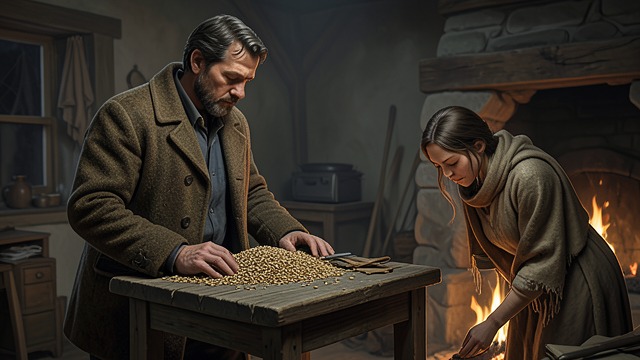
Seasonal Need
Scarcity approaches
As autumn work ends, households calculate taxes, debts, winter stores, and the cost of animals and clothing.
Different thresholds
Wealthier farmers struggle to meet expenses; landless families face immediate hunger and have little to sell.
Winter Hunger
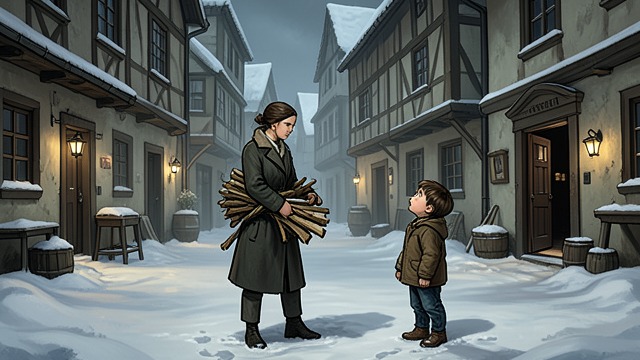
Winter Hunger
Resources run out
The cold, snow, and absence of work leave poor households short of food, fuel, and money.
Charity’s limits
Borrowing from the miller or innkeeper brings debt, while occasional gifts ease hardship without changing its causes.
Women Hold the Farm
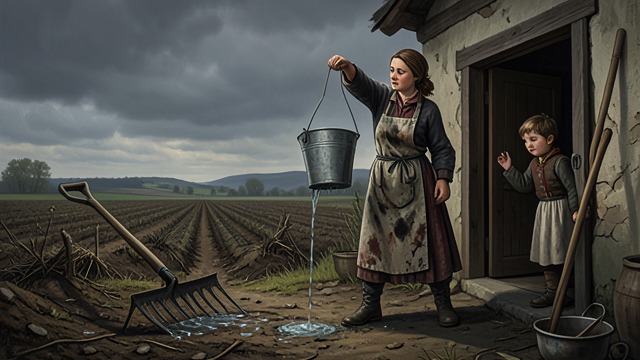
Women Hold the Farm
Work expands
With men imprisoned, women manage animals, fields, children, and household maintenance, often with limited strength and resources.
A fragile village economy
Neglected buildings and fallow fields reveal how much the community depended on labor it had treated as ordinary and replaceable.
Neighbors Plow Together
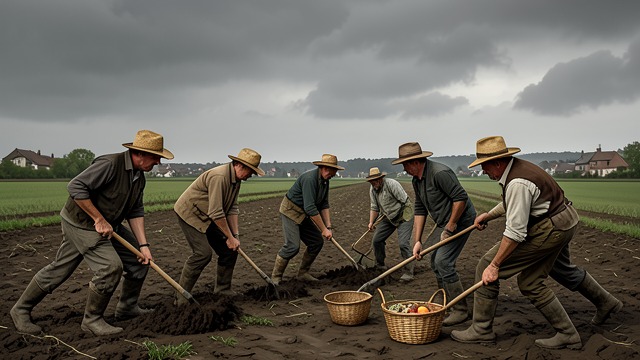
Neighbors Plow Together
A gift of labor
Men from neighboring villages arrive to help Lipce families work their fields for thanks rather than wages.
Solidarity’s limits
The help brings hope, but the poorest laborers remain in greatest need and cannot be rescued by a single gesture.
A Cottage Rebuilt
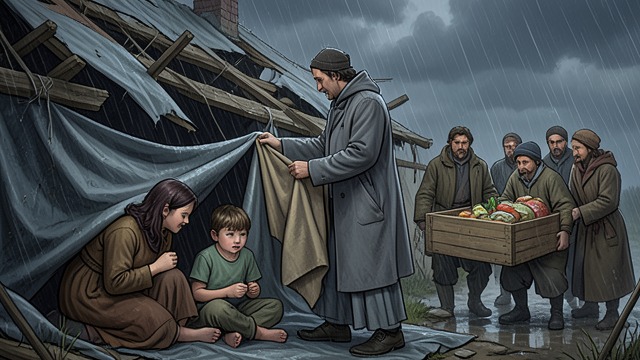
A Cottage Rebuilt
Disaster and displacement
A storm destroys Weronka’s home, leaving her and her children without shelter.
A community responds
The priest offers room and neighbors bring provisions, showing practical solidarity even as scarcity remains widespread.
late autumn
winter
after the arrests
spring
after the spring storm
